
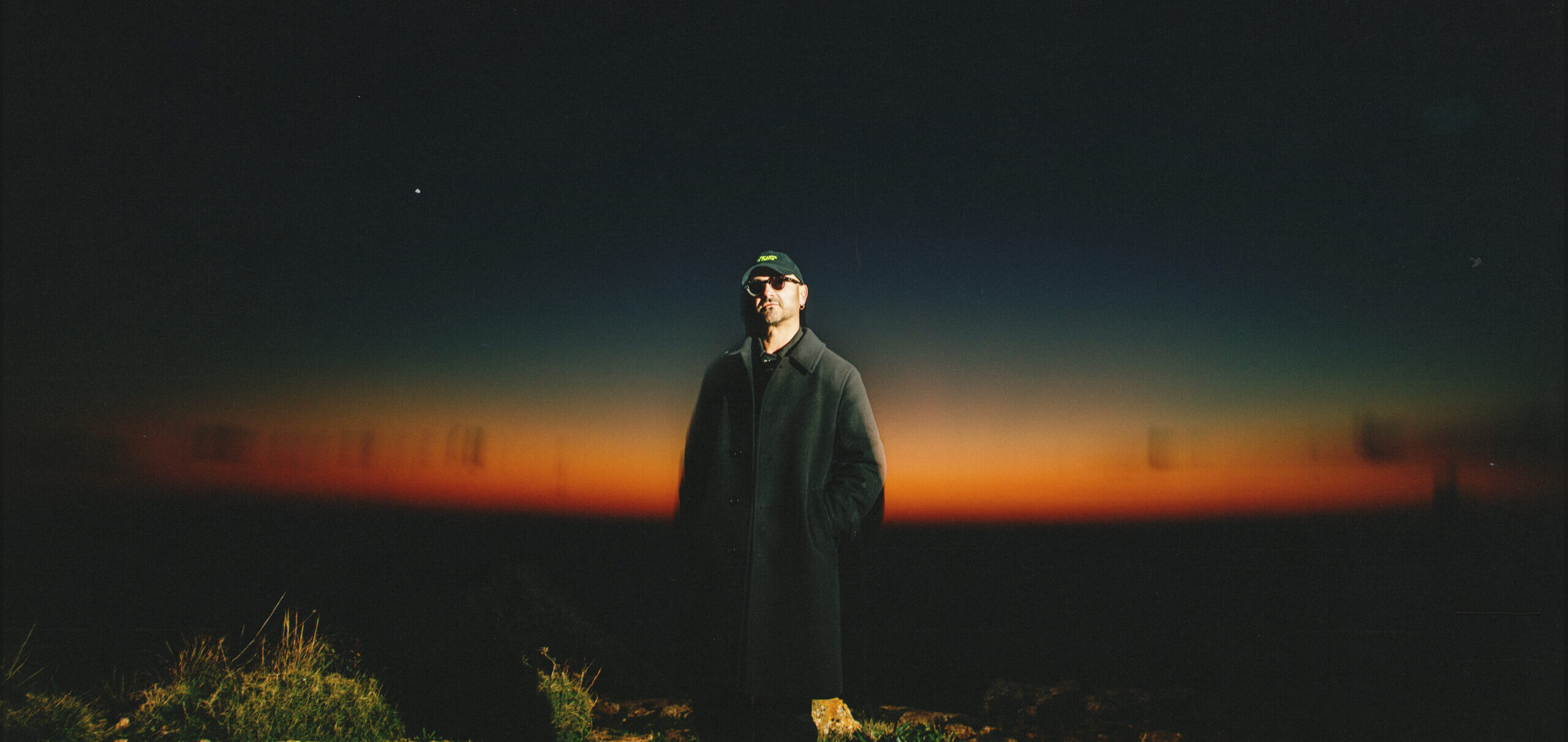
There’s a moment while listening to Isla Diferente when the line between music and landscape seems to disappear. The wind blowing across Lanzarote, the silence of its volcanic expanses, the sound of rocks and caves all become part of the composition, just as much as synthesizers and percussion. It is the result of the ongoing research of Andrea Mangia, aka Populous, a producer and DJ who has spent more than two decades building a deeply personal path through experimentation and cross-pollination, blending electronic music, tropical rhythms, world influences and international collaborations without ever losing his own identity.
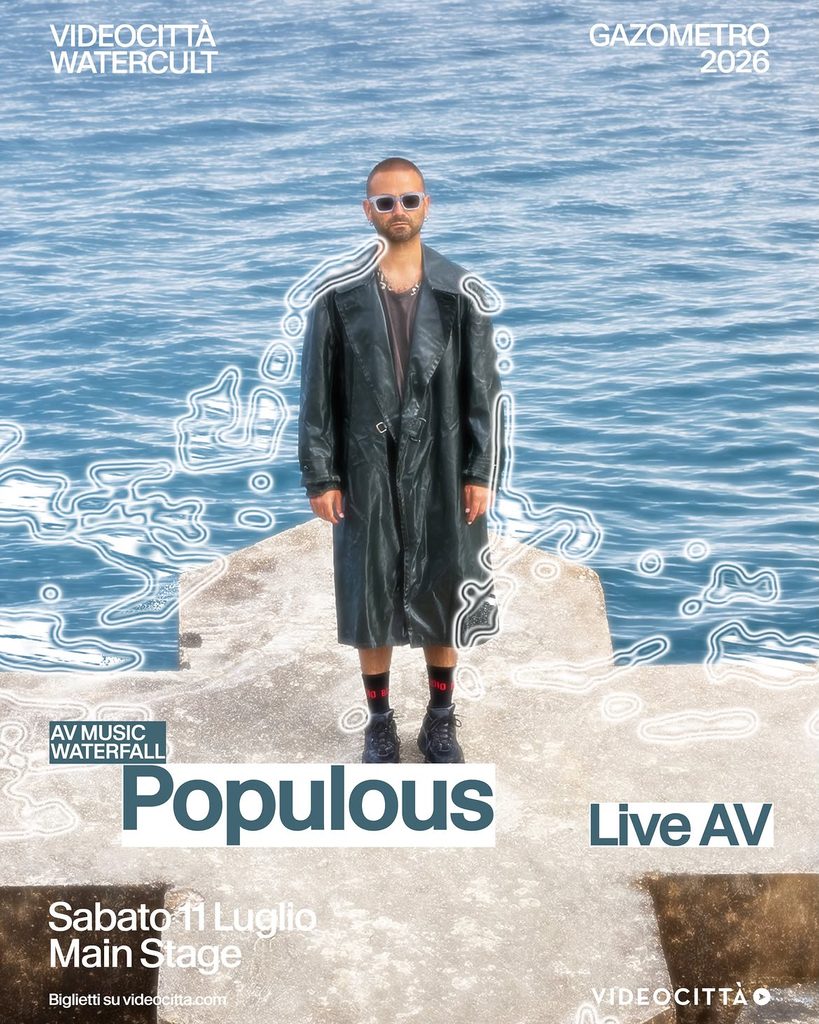
On the occasion of the summer dates of his audiovisual live show, including Saturday, July 11 at Videocittà in Rome, we sat down with Populous to talk about the making of Isla Diferente, the relationship between field recordings and composition, his collaboration with Furio Ganz on the AV show, and a constant focus on what comes next, including his new label Latinambient.

You’ve now been active for more than 20 years. From Quipo to Isla Diferente, via Night Safari, Azulejos, W and collaborations with major brands, your career has gone through several different phases. One of your first albums was Queue for Love, released on Thomas Morr’s German label Morr Music. Has the evolution of your sound towards the Latinambient aesthetic of your latest album been a natural progression, or the result of an ongoing process of introspection and research?
I’d say it’s been a natural journey and, above all, a free one. I’ve never compromised and I’ve never anxiously chased success. I started touring my music relatively late. A combination of shyness and sociopathy got in the way. Maybe that’s also why I still enjoy travelling and playing so much, even though I’m not exactly a kid anymore. Let’s just say I’m still making up for lost time.
Your latest album, Isla Diferente, was born out of your experience on Isla del Fuego, Lanzarote. It’s a unique place where nature expresses itself through untouched landscapes, extraordinary geothermal formations and a distinctive artistic culture shaped in part by Manrique, as well as that relentless wind. What inspired you the most while making the album?
I’m very connected to the idea of chroma applied to sound. I listen to an album and immediately associate it with images, landscapes and colours. The first time I went to Lanzarote, I knew I would have to come back and do something there. That experience eventually became an album that is darker and more mysterious than my previous work. I was going through a difficult period and I needed to surround myself with nothing. I wanted to isolate myself and feel tiny in front of nature.
Throughout the record, you used different sounds from caves, wind and plants. Every location on the island has its own sonic identity. How did you choose the right sound to use when you had several recordings of similar sounds, but with different levels of intensity?
I wasn’t really looking for the “right sound”. I was interested in understanding which recording could best convey the feeling of that place at that precise moment. I tried to give those incredibly tactile and severe landscapes a musical form by mixing software and field recordings. During the process, I also realised how fundamental silence can be within a composition. At a time when albums are becoming increasingly packed with instruments, sounds and layers, I chose to use silence as an actual instrument. The good old “less is more”.
In a recent interview, you said that audiences in Milan sometimes struggle to “let themselves go”. How do you see the Roman audience compared to the Milanese one?
I’ve just played a show in Milan, at the Triennale, and I had to rethink that statement: there was an energy I had never experienced in Milan before. But Rome, as I always tell my friends, is by far the best place right now to play my sounds and rhythms, which aren’t exactly as fast as the kind of dance music that is popular at the moment. The city is full of parties where DJs play my music, often slowing it down even further. I absolutely love that. It’s as if part of the audience is resisting the rhythms of the present, choosing a more lysergic, trippy and psychedelic experience instead.
Over the past winter, you took the AV show across Italy and abroad. This summer, you’ll be playing dates in Naples, Genoa, Milan and Rome, including Videocittà. Are you planning to bring anything new to the show for this occasion?
The very first AV Live show was actually in Rome, during Romaeuropa. It was the first test, where we used the Roman audience as our guinea pigs. Wonderful guinea pigs. It was a beautiful night, but it also allowed us to understand which details needed to be adjusted. Today the live show is fully road-tested and, according to both Furio Ganz and myself, it really works the way we imagined it would. But I like to think of it as something alive, something that continues to evolve from one performance to the next.
Can you tell us about how you worked with Furio Ganz on the creation of the AV Live show?
I’ve known Furio for many years now. I’d say our relationship is 80% based on exchanging deep reggaeton and dub techno tracks, while the remaining 20% is spent talking about work.
For Isla Diferente, did you start from real footage shot in Lanzarote, or was the visual side built in the studio starting from the album’s sonic inspirations?
There’s really a bit of everything: photographs, footage we shot ourselves with both professional cameras and our phones, AI-generated images, graphic elements, text, found footage and old films that we scanned. Literally everything. For example, for one section of the show, Furio worked on a study of stones: he photographed fragments of mountains and groups of rocks, then processed those images using AI, animating them through a series of keywords that we wanted to connect to the visual language of the show.
During the live show, do Ganz’s visuals follow a fixed score synchronised with the set, or is there room for real-time interaction with the changes you introduce during the performance?
There are some sections that are completely synchronised, while others are manipulated in real time, specifically to follow the flow of the sound.
You released your latest EP, Glitch 2000 / Rave Down, in April. Do you have any new projects in the pipeline for the second half of 2026?
I’d like to release new artists on Latinambient and then focus on a dub record. It’s a type of music that has been with me forever, and I feel like the time has come to really dive into it.
Thanks to Ufficio stampa GDG Press.